Women Talking: The Film

In 2022, a film written and directed by Sarah Polley came out. Inspired by the novel of the same name, Women Talking took the story by Miriam Toews and adapted it for the screen. The first major difference is switching the narrator from August to a teenage girl named Autje. This made it the women’s story as opposed to a man telling the minutes of the meeting. It also makes it painfully obvious to the audience just who exactly has been traumatized.
Just like in the book, the audience does not see the rapes themselves. Instead, the aftermath is displayed: bloody sheets accompanied by tears, fear, and a disconcerting ringing of a bell which tells the audience that they are watching a flashback.
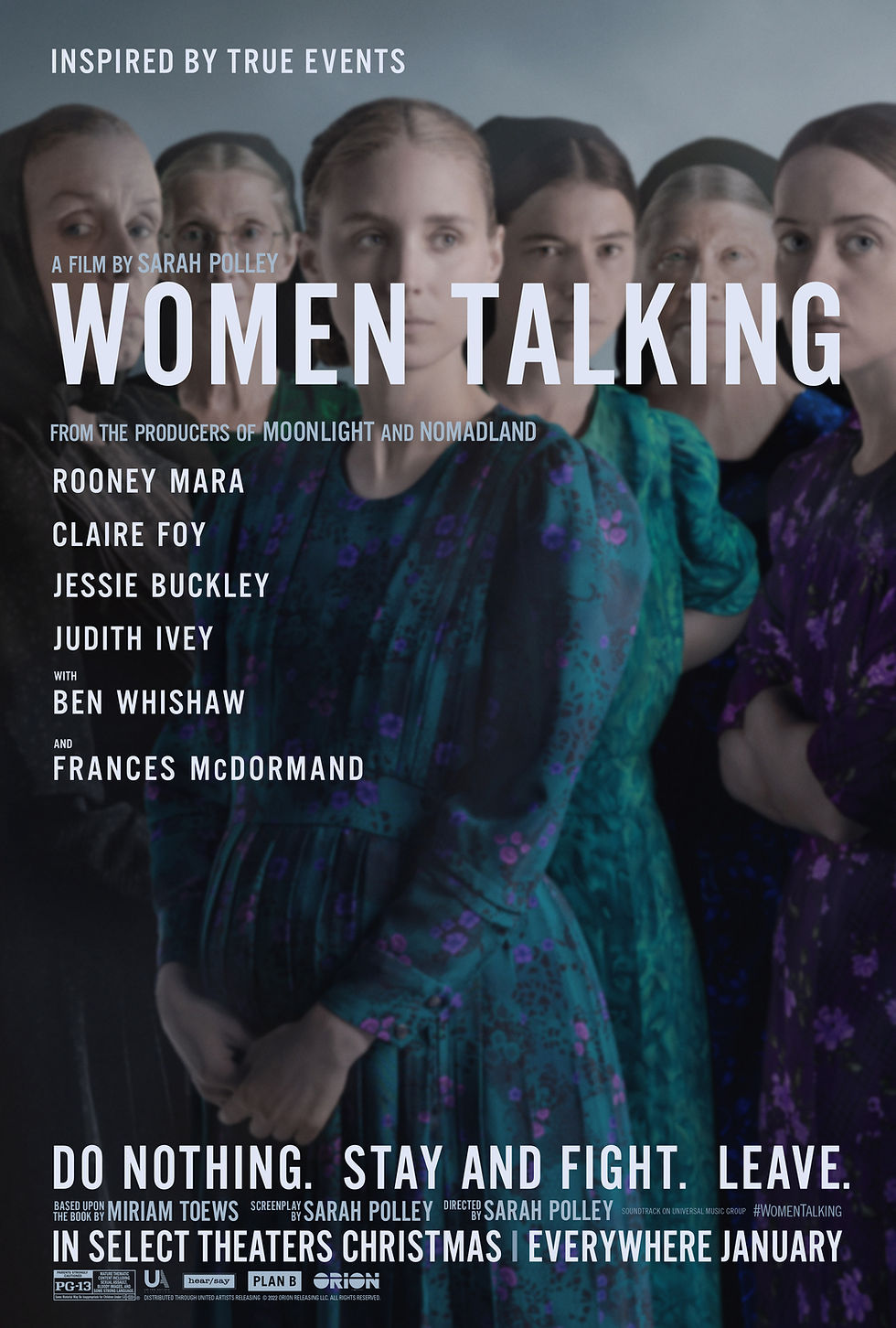
Polley says that the story is told as a fable, so that the lessons have “broader resonance” (PBS). The location of the fictional colony in the film is intentionally ambiguous so that the lesson audiences take away is that this can--and does--happen anywhere, to any person.
The film is expressionistic. The novel follows August's train of thought as well as the minutes of the meeting whereas the film focuses on the women and their relationships instead of August. At the beginning of the film, a card reads "What follows is an act of female imagination," a direct callout to the actual rapes being blamed on wild female imagination. Instead of letting that phrase continue to gaslight though, Polley (and Toews) spins it around and asks, "What if the women in this situation were able to speak up for themselves? What would that world look like?"

Each woman has her own response to the discourse occurring around them. Mejal (may-all) smokes and has a panic attack. Greta teaches lessons to the others through stories about her two horses, Ruth and Cheryl. Neitje (nee-chuh) draws pictures. Mariche (ma-ree-kay) is cynical and angry, two ways of covering up her fear. Academy Award Winner Jessie Buckley, who played Mariche in the film, explains that "in a way, she’s learned to survive her pain by hoping for something better in the next life. And what she comes to unlearn about herself is that actually, there’s enough to hope for in the life that she’s living and within this community and within this conversation, in some way, sheds the skin that she’s always carried" (Stephen Colbert, YouTube).
The film explores the complexity of female friendships and relationships. It examines the complexities of the situations each of these women finds herself in--and the complexities of all abuse stories. Each woman has to make a choice of what faith, love, safety, pacifism, and forgiveness all look like to them. What matters most to them and how can they best achieve it, even when it scares them?


Comments